

February 11, 2013

ENCOUNTERING THE OTHER (story by Jessica Baltzersen)

“In our society, we don’t know what to do with people that become other,” says Dr. Kate Lassiter, assistant professor of Religious and Pastoral Studies at the College of Mount St. Joseph in Cincinnati, Ohio.

The “other” she is referring to are the men and women incarcerated whose voices go unheard and who, as some people perceive, become permanently identified as a delinquent or criminal. When she was 21-years old, Lassiter found herself working with inmates inside a correctional institution. She did not commit a crime, nor was she incarcerated. Instead, she spent her time inside prison walls dedicating her summer to prison ministry work.

It was the summer of 2000, in Hagerstown, Maryland. Lassiter divided her time working at Roxbury Correctional Institution, Maryland Correctional Institution, and Maryland Correctional Training Center. She entered the facilities not knowing what experiences she would encounter.

Lassiter never expected to be working in prison ministry. “It was just something I stumbled into,” she said.

She worked with a Catholic nun in a male correctional facility where she was known as “Sister Kate,” and for three days a week she performed counseling sessions, organized prayer and worship groups, and led church services. The other two days a week she spent in after-prison ministry at a social service agency that helped those individuals who were no longer incarcerated. This service provided basic needs, food, and also housing referrals.

“Prisons were originally religious institutions intended for solitude and reflection,” says Lassiter. Through counseling inmates, she was able to witness the metanoia or spiritual transformation of men who wanted to turn their lives around for the better.

“It was hard, though, because I was never there 24/7,” she says. “There’s no way I could fully grasp or understand what it would be like to be in solitude all of the time.” She came to this realization on July 4, 2000. As she was walking out of the prison she glanced back at the barbed wire surrounding the facility and then looked up at the dark night sky being lit up with fireworks. Seeing the two elements, one symbolizing freedom and the other oppression, she realized how contrary the two were and how she was simply an outsider trying to understand what the people inside the walls were going through.

“Religion sets up guidelines for our lives,” says Lassiter, “and religion has an ability to empower one person.”

She remembered one man in particular, who at the time weighed over 400 pounds. After he began to accept Jesus into his life, he was inspired to not only turn his life around spiritually, but mentally and physically as well. He taught himself to run and lost nearly 200 pounds. He also went back and pursued his GED. After he allowed God into his life it inspired him to change his entire self.

The justice system uses incarceration to keep people oppressed. But to some of those who are incarcerated it is a “community to call home, where they encourage each other,” says Lassiter. In experiencing incarceration, an inmate can view it as a punishment or it can be viewed as a second chance to look within oneself and realize that through spirituality one has the ability to change his or her life.

Twelve years ago, Lassiter worked with what she describes as “people on the edge.” Now, as an assistant professor in the Department of Religious and Pastoral Studies, she still keeps in touch with her mentor and continues research around social justice issues to “support, guide and  nourish those who find themselves incarcerated.

Lassiter believes that she positively influenced men’s lives through her ministry work and counseling.

Humbly, she says, “I don’t want to claim that I changed anyone’s life. It is just something I was called to do.”


April 12, 2013

Charity Miles: Interview with William Lambers

The following is an interview with William Lambers, whose vigorous work with addressing global hunger has now reached international proportions.  RED! contributing writer, Le’Erin Watts, conducted the interview.

RED!: What is it about The College of Mount St. Joseph that interests you and why are you so connected?

W.L.: I went to school at the college as an undergraduate and also for my master’s degree. Over that time, I have gotten to know teachers on campus, many of who are also authors or journalists. That personal interaction you have at the Mount with the teachers keeps you connected.

RED!: People around the country know you for your fight against and work to address hunger, especially hunger around the world. How are you able to involve the younger students at Mount St. Joseph in the work you do?

W.L.: I get the opportunity to speak at Mount classes and also take part in some events on campus. This gives me the chance to talk to the students about global hunger and ways they can get involved, including one way I will talk about in the next answer.


RED!: What interested you about Charity Miles?

W.L.: I used to see these tweets from the World Food Programme about Charity Miles so I asked what was this about? The World Food Programme office in New York filled me on the details, which I could use in a story. Charity Miles is a free app that you just download onto your cell phone. For every mile you walk, run, or bike you can raise money for a charity like the World Food Programme or Feeding America. Since I also walked and since I am a former runner, I thought I could maybe get involved myself. I just needed to get the cell phone, which I did.

RED!: Have you started the program? How many miles have you logged?

W.L: I announced to Jeffrey Hillard’s Cincinnati Authors class in late 2012 that I would attempt to start Charity Miles. I started it almost right after that class and have logged well over 100 miles mostly running and some walking. I was around 100 miles when I tried to count them in early December and have logged many miles since. I was told I am the 4th ranked runner in terms of miles for the World Food Programme.

RED!: Are there any other charities or organizations out there that are using creative ways to raise money?

W.L.: The World Food Programme has an online game called FreeRice which I talk a lot about in classes and speaking engagements. I even wrote a few of the questions for the game. Every time you get a correct answer ten grains of rice are donated to the World Food Programme. Some charities like the Feed Project sell merchandise to raise funds. There are creative ways that come right from the College of Mount St. Joseph, too. A student, Elizabeth Paff, who was recently in the Cincinnati Authors class, has started hunger fighting initiatives including launching a FreeRice team and collecting funds for life-saving Plumpy’nut food, which treats malnutrition, and gradually I believe she also plans to help faciliated a hunger walk to raise awareness to helping provide food to those in great need.

William Lambers is an author and historian. Visit his sites: http://www.williamlambers.com  Author page at Amazon.com http://www.twitter.com/williamlambers

February 11, 2013

WOOF! (by Patricia N. Wernert)

“How would you like a puppy?” I was asked. Sounds like a pretty straightforward question that is posed everywhere. I would like to share why that very question was anything but ordinary when I was asked it in the early 1990s.

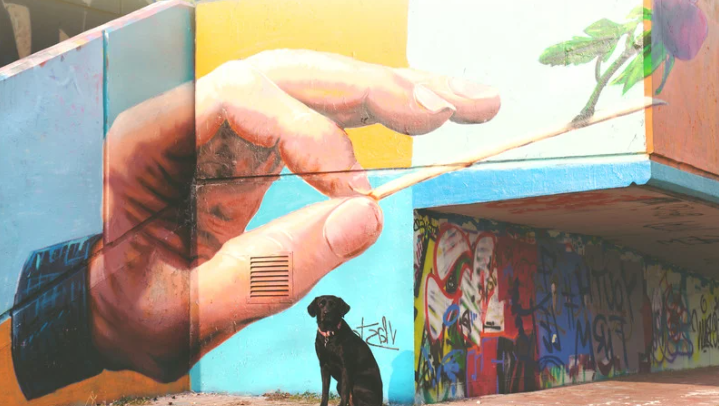
In 1993, I had been incarcerated 18 years and certainly had not experienced the touch of silky ears or big brown eyes looking at me during this time. I was being offered the unique opportunity of helping to start a prison program of raising puppies for “Pilot Dog.” As puppy raisers, we receive eight-week-old to raise as potential service dogs for visually impaired individuals. In my mind, gosh, what a great opportunity to give back to others.

Puppies require care, love, and gentle direction in learning basic commands. Prison rules put a good deal of added structure into what is usually easy. My puppy may need to “go potty,” but if it is “count time” the puppy has to wait. Try explaining that to an eight-week-old puppy in the middle of the night.

The upside of doing something like this is watching and guiding the tiny puppy as it grows into a beautiful dog. Your time and hard work develop before your eyes. No matter how bad a day you may have, you have to smile at the antics of a puppy. You start smiling, your mood improves, and you respond in a positive manner with other inmates or staff.

One of the few things a person in prison has any control over is how she or he reacts to any situation. Inmates are told when to go to bed, to get up, to perform bodily functions, to go eat, what to eat, what to wear, and what to do in about all aspects of life. I have found that keeping a positive mindset, even when adversity abounds makes a situation easier to get through. Having that puppy trip over its feet or run up to you makes you smile and it defuses whatever negative event that may have transpired earlier.

I am still training dogs in 2012 and 2013, and no one could have told me that I would still be doing it in prison. The incarceration sentence of 20-years-to-life is now approaching 38-to-life. Yeah, that is pretty depressing if I dwell on the negative aspect of this time. I look down on the nine-week-old black Lab I named “Cricket” curled up at my feet and see the positive. I am privileged to raise this puppy and she will eventually give a person freedom.

When a dog is partnered, we see the letter that Pilot Dog sends to the institution, and I feel a ssense of helping another person. We never know the actual name of the person, only if it is a man or woman.

I have worked with training other service disciplines in another prison-based program. This is very worthwhile, too.

Dogs are so much more than pets and capable of doing a wide variety of tasts to help humans live a fuller and safer life. If you happen to see a service dog guiding its person along, it just might be a dog that began its service in a prison. People in prison can begin to their future, too. We just need a chance.


Editor’s Note:  Patricia N. Wernert is incarcerated at Dayton Correctional Institution. She is one of the leaders in a special program that helps raise dogs that provide future assistance to visually impaired individuals.


September 29, 2012

Winfield House: Breaking the Cycle of Poverty

At Winfield House this month and October, we are collecting new or gently used outer wear for men. Those items include: coats, vests, sweatshirts, gloves, hats, and boots.

To all of the knitters and crocheter’s out there, we need handmade scarves and hats. If you are inclined, blankets, too. All items are collected and given in love to the men who live under the bridges in Cincinnati.

Why?

Because they need you!

Have you ever driven a car and accidently lost control? It can be likened to the downward spiral of homelessness or poverty. Sometimes we are driving through life without a care, all of the sudden something comes at us, or perhaps we were not paying attention, and we need to move the wheel quickly to avoid an accident. Sometimes it works, and sometimes it doesn’t. Life is that way, hard to predict. If, when driving, we are startled, we jerk the wheel, and over-correct ourselves, as our adrenaline is heightened; we either miss the object or we are hit from the oncoming car.

If we swerve and still hit the object, we are now off the road and perhaps in an undesirable position. The car is tilted to one side, half on rock and half in the dirt.  Last night’s rain has made the dirt mud, so our tires are quickly sinking. We are somewhat immobilized by the shock of the accident, wondering if we have killed a person or animal we hit. Afraid of the tilt of the car, we try to examine our options. There don’t seem to be very many. We try to call for help, but find we have no phone service.

Seeing that the tilt of the car could be dangerous, rather than abandon the vehicle, we try to restart and maneuver the car into a better position.  In doing so, we have now sunk the tires deeper into the mud. The spinning noise is bringing us to hopelessness, and we realize the vehicle is truly stuck.  To leave the vehicle may not be safe as we are in now unfamiliar territory. Worried about the other vehicle, we pray, try 911 again, and are wracked with fear.

It might occur to us to now look for our own wounds, as we feel a sharp pain in our side, and see the oozing of blood on our forehead. The dizziness of the whole event has now brought us to a paralyzed state. We need assistance!

So, it can be with life circumstances. We sometimes need assistance. Whether we are brought to a low place by another, our own decisions, or a pervasive lifestyle, we have spun out the tires in exhaustion and cannot find hope for our circumstance. There seems to be no one to help us dig out from the accident.

At Winfield House, we are dedicated to breaking the cycle of poverty.

Poverty is defined as a state of mind or financial situation where there is lack to sustain life and/or a healthy emotional condition.

Anyone can be affected at any time of their lives by poverty. Either one is born into it, or somehow brought low by circumstance.

For 20 years, Winfield House has helped individuals and families strive to become independent, self-reliant, and successful in both public and personal life.

Here is a three-pronged approach to helping:

Dignity- helping with basic needs, food, clothing, and life-sustaining supplies.
Discipline-helping with life skills to help avoid future problems, and to create a new life.
Direction-spiritual help to bring richness to our souls.

Regarding the poor, I hear this all the time, “Why don’t they just get a job?”
In responding, I have to have as much mercy on the giver as the receiver. Understanding poverty and homelessness is not as easy as it seems. The dynamics are as diverse as the people. In the Bible, we are mandated to take care of the widows, orphans and the poor, so I am especially honored to be part of the restoration team.

Please open your hearts to our friends under the bridge. You, too, may swerve off the road one day and need assistance. You never know.

 
by Karyn Alexander

Voice of the Nations column for RED!
Executive Director, Winfieldhouse.org

Winfield House brings the good news of Jesus in a practical way, bringing hope to God’s people.
Voice of the Nations, Rev.5:19 “With your blood you purchased men for God from every tribe, language, and nation.”

September 29, 2012

The World Without Me – An Interview with Sherrie Kleinholz

The following exclusive interview with Sherrie Kleinholz, author and advocate for the homeless, appears on the eve of the publication of her first book, The World Without Me.  The book is an anthology of stories by homeless individuals in Greater Cincinnati, compiled and edited by Ms. Kleinholz over a number of years.

Interview by Jordan Bailey

RED! – What sparked your interest to begin researching such a major crisis in society today
such as homelessness?

S.K. – My interest in those who are without has been growing within me since my teenage years
and has peaked greatly in my adult years. I look around and I see so many beautiful
people who are disconsolate and suffering deeply with no one to help guide them
through it. I watch as there is no one sharing love with them and I am heartbroken.

RED! – Have you done any volunteer work – for instance, in shelters or in a food pantry – in
terms of assisting the homeless?  What were any of those experiences like and what are
some things you have learned being around them?

S.K. – I have worked at a homeless shelter doing counseling as part of my internship and this
has been very rewarding. It gave me a great sense of being a part of something so much
greater and my heart would be filled with a little more respect, humility, and love for
those I interacted with each time I left. I also enjoy making lunches to pass out to those
on the streets or take to the soup kitchen and have developed meaningful relationships
with these I interact with.

RED! – Tell us a little about your book and how it came about.

S.K.The World Without Me is a compilation of stories told by those who live them
every day. Stories about what it is like to be on the streets without your basic
needs readily available such as food, shelter, clean clothes, medical care, and
love. A great deal of the stories are written in dialogue form. This is done so that
the reader can get a better understanding of what the person being interviewed is
feeling, thinking and seeing from their perspective. The book came about because
it has been a part of my life for many years and to watch as others spit at,
degrade, and ridicule those who have to live it deeply saddens me. It saddens me
for the person on the street, as well as the person who is ridiculing and the world
as a whole.

RED! – You and RED! technical assistant, William Lambers, also a legendary advocate of
global food assistance, have worked together recently on issues of homelessness and
food advocacy. How successful have you been?

S.K. – I cannot say enough about William Lambers. What a kind hearted, giving, intelligent,
talented, and genuine man he is! My work with William began in my undergrad years at
Mount St. Joe when we held a fund raiser for international charities on hunger to which
was a success. He has also shown me how to help feed those who are hungry by playing
a game for free that donates rice for international hunger. We have also done an honorary
food drive in his mom’s name which helped three local pantries, and he has been a
profound help in the writing of this book. I’d be lost without him! I am quite certain that
we will be working together for a long time to come.

RED! – What kind of impact would you like your book to make?

S.K. – It is with my deepest hope that the stories inside this book grab the reader’s heart to help
them realize that the person behind the story is just like the person who is reading it.
They have feelings that hurt, thoughts that are important, needs to be met, & wants that
are forgotten. I hope that the reader can see that more often than not the person behind
the story had it all once and lost it because of reasons that could happen to anyone
including the person reading the book. These reasons consisting things such as physical
illness, death of a loved one, tragedy and mental illness. I want the reader to close the
book with tears in their eyes and love in their heart and realize that not every person on
the streets is trying to scam them and if they are trying to scam them to ask “why?” I
hope that the reader sees that person on the street are just people who are not lucky
enough to have the social support or means that others who are not on the streets have
had. If a person believes that it could not happen to them then they need to open their
eyes and see life for what it is. It can happen to anyone at any given moment and it can
break you.

RED! - What are some things you believe the city of Cincinnati, or the region on the whole, can
do to better address homelessness, especially as indicators suggest it is on the rise in
this particular U.S. economy?

S.K. – Sometimes when we look at a problem we feel alone and overwhelmed and we cut
ourselves off emotionally in order to protect our overall wellbeing. More often than not
we just don’t understand something and we fear what we do not understand. Therefore,
I encourage each person to educate themselves in understanding homelessness for what
it is.

Many times we create comforting self-soothing stories about those who are homeless
such as “they’re just lazy, a drug addict, and/or worthless criminals. I believe we do this
because we have to fill the void of “not knowing”. We simply cannot see a person who
is in need and drive by them because we would feel bad so we put a spin on our thinking
to justify driving by. Does this mean that the person on the street is not plagued by
mental illness, addiction, the loss of desire to help themselves, or is not a criminal?
Absolutely not!  However, keep in mind that inside each of us is our own personal evil
wolf lying in wait that could break free when pushed to our own thresholds. So maybe
ask yourself, “If this person really is one of those things then why and how did it come to
this and how can I help stop it or prevent it?” Remind yourself that you to could lose your
job have someone you love die and take your spirit with you, get a debilitating mental
illness, or lose your health and can’t work. You too could be pushed to your threshold
and wake up with nothing.

Therefore, to best address homelessness educate yourself to get a better understanding
of it, know it could happen to you, realize how powerful you are in the fight against it, and
advocate! As individuals we often do not understand how powerful we are. One person
can reach many people but they underestimate their own power and think to themselves,
“What I have to offer and contribute is not really making a difference.” That thought is
incorrect. Trust me; you are powerful in the lives of others. Inside each of us is a hero.

September 5, 2012

SANDING STONES by Karyn B. Alexander


On a recent trip to Michigan, I had an awesome experience. We traveled all the way to the tip of a peninsula where a lone lighthouse stood. The day was chilly, like most Michigan days, but the sun shone enough to allow us to walk the beach. The beaches of Michigan are full of white sand, rocks, and more rocks. The beach was interesting because the sand stretched so far out from the shore, allowing us to walk a very long time before reaching water.  As we walked, I started to see little piles of rocks. I looked three feet from where I stood, then 10 feet, then 30 feet, and beyond. The rocks were everywhere. I looked again and knew the rock piles were intentional, not a random act of nature. This looked to be something meaningful, deep and important. I automatically look for meaning in everything, but here, I didn’t even have to try. It was laid out right before me.

I had been walking for some time before discovering the mysterious little monuments; the skyline had blue and white clouds formed into puffy swirls that resembled water more than sky. It made me think of the verse in the book of Genesis where God “separated the waters.” I felt as if I understood that verse better after seeing it in reality; water pressed against sky water, all the same.  Once I looked down, though, I was actually astonished to see what I had almost missed. It was so clever and meaningful. People from everywhere, hundreds of them, had placed the stones one on another as if to recreate a Stonehenge-like mystery.

The builders were no longer on the beach, so it certainly was a mystery to those of us just arriving. I looked around. Others had noticed the beautiful monuments, too. I immediately wanted to build my own. I started piling rocks, and then I stopped. I wanted it to be more than just a few simple stacked stones. I needed it to represent who I was and my legacy to the beach and its future visitors.

I carefully made several small piles, knowing what it meant to me, but leaving a question to hang for the next beach walker. I was so excited to leave a message for someone else to ponder or decipher.

Isn’t that truly what we all want?

When asked, the elderly say that the thing they regret the most was not leaving a mark for future generations.

In the book of Genesis, God also told His people to leave a mark. As Moses took them across the Red Sea, they were instructed to send 12 men back into the sea to bring out a stone for each tribe. They were to stack the stones, to leave a mark for the next generation. The mark was to show what God had done for them, which was freeing them from slavery.

My little stone pile was the same. I had taken wet rocks and stacked them in a manner to show what God had done for me. He had freed me, snatching me out of darkness. He had brought me to His knowledge and changed my life forever- pile one.  He allowed me to live and share His nature with my children and family who would, too, forever be changed- pile two.

I was grateful for that day on the beach, a reminder of how important it is to leave a legacy of great value. Standing Stones they call it. Reminders of the great things God has done for us. A surprise, an exciting monument, a mystery for sure!


Voice of the Nations column

Karyn Alexander
Executive Director, Winfieldhouse.org


Voice of the Nations column

July 30, 2012

HEARTBEAT

Something awesome happened to me very recently.

It began with this remark: “Karyn, I could feel your heart beating so fast!”

What a comment!  How many of us are close enough to someone who could have that said?

How many of us can feel another person’s heartbeat?

If given the chance, who would you choose to  “feel” your heartbeat?

I was at dance class.  I agreed to do a spotlight with my teacher. A spotlight is when the entire studio stops dancing, everyone sits down, and only you, the dancer, are on stage.

Gulp!  For a chicken like me, this is a big deal.

My teacher led me to the floor. All eyes were on us. My heart began to beat quickly. My mind was racing. I was thinking about the potential for dance calamity.

Jeff offered his left hand. I took it. We entered our “frame.”  Arms wide, chest meeting chest, my hips joined to his thigh.

Tango! Off we went, around the floor.

“Huh!”  It’s a loud grunt Jeff makes to punctuate the staccato of the move. Heads tilted back, angled body movements, we made it.  No calamity.  Applause from the crowd; we bowed and gracefully moved from the floor.

Jeff hugged me and said, “Karyn, I could feel your heart beating so fast.”

I got home and thought it so remarkable that we were close enough in movement to feel one another’s heartbeat.
I thought about the Bible scripture in Psalm 37: 4 in which God tells us, “Delight yourself in the Lord, and He will give you the desires of your “heart.” It seemed awesome that, if God offers this great gift, He must know what is beating in our hearts.  I thought it beautiful, just like the dance, that our God would hold me close enough to feel and understand my heart beat.

Take a dance lesson with the Lord. Do a spotlight and allow Him to feel your heartbeat.

Tango!

Karyn Alexander
Executive Director, Winfield House
Winfieldhouse.org
Winfield House brings the good news of Jesus in a practical way, giving hope to God’s people.
Voice of the Nations:  Rev.5:9 “With your blood you purchased men for God from every tribe, people, language and nation.”

July 5, 2012

Carriers of Hope: Ohio Justice & Policy Center (by Jennifer Von Gries)


What is unique about Big Brothers Big Sisters of Greater Cincinnati: current Vice President of Recruitment, Lynn Cameron, at this point in his life had once been a juvenile probation officer for eight years. He was working with a few kids on probation and there was boy, 13-years old, who seemed bright, but he had a chip on his shoulder and was in trouble.

Since Cameron, at that time, was a volunteer at Big Brothers Big Sisters of Greater Cincinnati and knew about the organization, he told the boy that he could sign him up. This young man didn’t believe that it would work out for him; he came to tears and told Cameron that if they would have met a couple years ago it might have worked. But, to the young man, it was too late now. 

Two years later, this 13-year old boy died from an overdose by mixing the wrong combination of illegal substances. “If we could only work with kids to help prevent this kind of situation from happening. If these kids don’t find a role model who is positive and appropriate, they could find them anywhere, such as with a gang member or someone off the streets, and potentially get them into trouble. I feel like we need these positive volunteers be role models,” says Cameron.  

When you walk into the offices of Big Brothers Big Sisters of Greater Cincinnati, the first feeling you experience is that of compassion and at home. In the hallways of Big Brothers Big Sisters of Greater Cincinnati you can observe pictures of organizations best matches. “These photos help represent who we are as an organization,” says Cameron.

His journey for the last 23-plus years explains why the impact from positive figures has an effect on teenagers. Cameron, immediately out of college, started working for the Juvenile Probation Department where a co-worker mentioned the Big Brothers Big Sisters program to him in 1988.

According to the Big Brothers Big Sisters website, each time Big Brothers Big Sisters pairs a child with a role model, they start something incredible: a one-to-one relationship built on trust and friendship that can blossom into a future of unlimited potential. And thanks to the first-ever nationwide impact study of a mentoring organization, they have the facts to prove it.

Corey Strauss, a graduate of the College of Mount St. Joseph, says, “I got involved with Big Brothers Big Sisters because a friend had mentioned it to me. I have always been interested in working with young children as a future career. Having been with my little brother made me a better mentor and a better person because I know I am helping him follow the right path. I want to be the role model that he can look up to by graduating from college and staying off the streets. I can give him the advice that he needs.”

At Big Brothers Big Sisters of Greater Cincinnati there are core programs and special programs.  The special programs include the Amachi program, which, in the West African tradition means, “Who knows but what God has brought us through the child.” 

Statistics say that, currently, there are approximately 2.4 million children that have one or more incarcerated parents in the United States. This statistic puts the child in an overwhelming state of mind and with that Big Brothers Big Sisters committed themselves to identify and help the children of incarcerated parents with one-to-one mentoring that will match the child with volunteers from the community. 

Cameron states that 30 to 40 percent of the children involved at Big Brothers Big Sisters are in the Amachi program. In his words, this saying means, “Look at the gift that God has given us through this child.”  Cameron says that the children do not know that they are in the Amachi program. Parents will put their child in this program to give the child a positive role model.

Cameron has been the Vice President of Recruitment for the past five years; however, he has been involved with Big Brothers Big Sisters for well over 10 years now as a case manager who interviews volunteers and matches them up with youths. 

“A very recent year was the toughest with our being short of our goal of matches of about 18 matches out of 500,” he says. In the first half of 2010, on the other hand, 110-plus individuals applied for goal matching in terms of fundraising.

Cameron says eighty percent of mentors have had good experiences. Twenty percent of the mentors will be lost in the first six months because of connection and pair-up issues. “This is something worthwhile. I want the recruiters to know that it is worthwhile, a good experience, and that they will enjoy being a Big Brother or Big Sister. They will build a good relationship and attachment,” he says.

“The reason why some pair-ups don’t click is because parents aren’t communicating. Some may feel like their mentors are upper class; however, our goal is to tell the parents and volunteers to not focus on materialistic things but on being a role model for the child.” 

Parents need to give permission to each activity that the mentor plans for their little brother or sister. That includes taking them to sports games or going to a salon to get nails done. Parents are always involved.

Some children are struggling with grades in school; however, every year a survey is conducted and the results come in stating that about 75 to 80 percent of the children have improved their grades. There are a variety of surveys conducted that focus on several different components of a person’s life including school, personal and relationships with others especially with self-confident and social skills.

Cameron says that children may not talk at first with their mentor, but after about three weeks they will socially improve for an example while speaking look in the eye of the person they are speaking to.

According to their community-based program, most of the relationships formed and the one-to-one outings and activities include going to parks, museums, listening to one another, and engaging into each other’s interests, and going to sports games. 

“A lot of the children really enjoy going to the Reds’ games. Being able to sit in the ball park and enjoy the game is something they always continue to ask to do in the spring. Sometimes, Big Brothers Big Sisters meets with their little ones on the weekends, and sometimes in the evenings. It is what works with the child and the mentor. Each pair is unique,” says Cameron.

Cameron didn’t receive his love and compassion from recruiting. As stated earlier he joined the Big Brothers Big Sisters when a coworker expressed how it would change his life. During Cameron’s journey he became a mentor for four little brothers. Describing his little brother’s experiences brought joy to his face, because he knows deeply that he made a difference in their lives. 

He has pride in the work which he does. Cameron described his first little brother as a boy who struggled with making friends in school and outside of school, just as he’s overcome the death of his father a year and a half before Cameron came into his life. The young man had suffered from physical and emotional disabilities and had a tough time prior to his adoption with his birth family. This little brother was with Cameron for seven years until he was 18.

“He was difficult to open up at first, but the more he and I got to know one another and hang out, he opened up a lot more,” says Cameron. “After I was done being his big brother I was given another individual whose life situation was different.”

Cameron’s second little brother had no father figure, missed school, and his mom was making excuses. “I got in involved with him in the 7th grade and knew that it wasn’t acceptable for him to be missing a lot of school. I wanted to see him get good grades. He improved his attendance the next year and from 9th through 12th grade he didn’t miss a single day.”

“My third brother also did not have a father figure. He was a good kid but had the lack of opportunity and lived in a rough area neighborhood. We went to Reds’ games and to the parks,” he says.

Cameron is currently still working with his fourth little brother. He describes him as a 15-year old boy in the 9th grade who has suffered from a lot loss.

Big Brothers Big Sisters has several fundraising events that go on each year. They have a Golf Outing, Bowl For Kid’s Sake, 5K Run, and Gold Ball Drop. To gather more information about these events and others, such as the annual Golf Outing and Golf Ball Drop, visit the impressive Big Brothers Big Sisters of Greater Cincinnati website.  

“To get involved, you don’t need to be an expert with children,” says Cameron.

July 3, 2012

Justice Advocate Stephen JohnsonGrove Speaking @ Partners with Justice (7-5-12)

July 3, 2012

Point Man – by Karyn B. Alexander

I have a friend who was in the military for many years. His position was “point man.” The point man is the tip of the triangle with the company of soldiers spread out behind in a triangular shape. The point man needs to be agile, small, quick, and obedient unto death.

The point man is not the commander, but the leader of troops for a directive operation. He is the first to scope out the enemy, and the first to be picked off if he fails to stay hidden or obey.

My friend was a successful point man. He could obey, lead and stay alive. He remained calm and quick in the face of the unknown.

Staying alive meant hearing the commanding officer, doing exactly as told-no matter what, and then leading the way through either a very tough terrain or challenging situation. The point man is a little like a spy and a warrior all at one time. This position takes immense trust; that is, trust in the commander (C.O.) and trust in the troops. A very precarious situation emerges if either is not in cooperation with one another. The point man can be caught between a bad plan or an unwilling company of soldiers. This could mean certain death for all. On the other hand, what a powerful fighting machine if executed properly; all flowing with the same mission, using their training and skills at the same time.

My friend is now a pastor. He is much like the warrior of old. He is out in front, listening and moving in obedience as he hears the commander speak.

The agility to avoid the enemy is important, as it is in tough fighting territory where the enemy can be disguised or hidden.

I would imagine leading a congregation would be almost more difficult than a company of soldiers, due to many Christians’ self -perception. Most do not see themselves as warriors or part of a larger vision.

They can miss their purpose by not understanding the commander’s mission.

Think about it: if we all listened to the commander and chief, and we were humble enough to follow the point man, what a beautiful army we would make, all flowing with the same vision using our gifts and talents to achieve the ultimate goal—Eternal life for so many.

Onward Christian Soldiers!

Karyn B. Alexander

Executive Director, Winfield House.org

Winfield House brings the good news of Jesus in practical ways to God’s people.

Voice of the Nations, Rev. 5: 11,”With your blood you purchased men from God from every tribe and language and people and nation.”

Follow

Get every new post delivered to your Inbox.

Join 704 other followers