
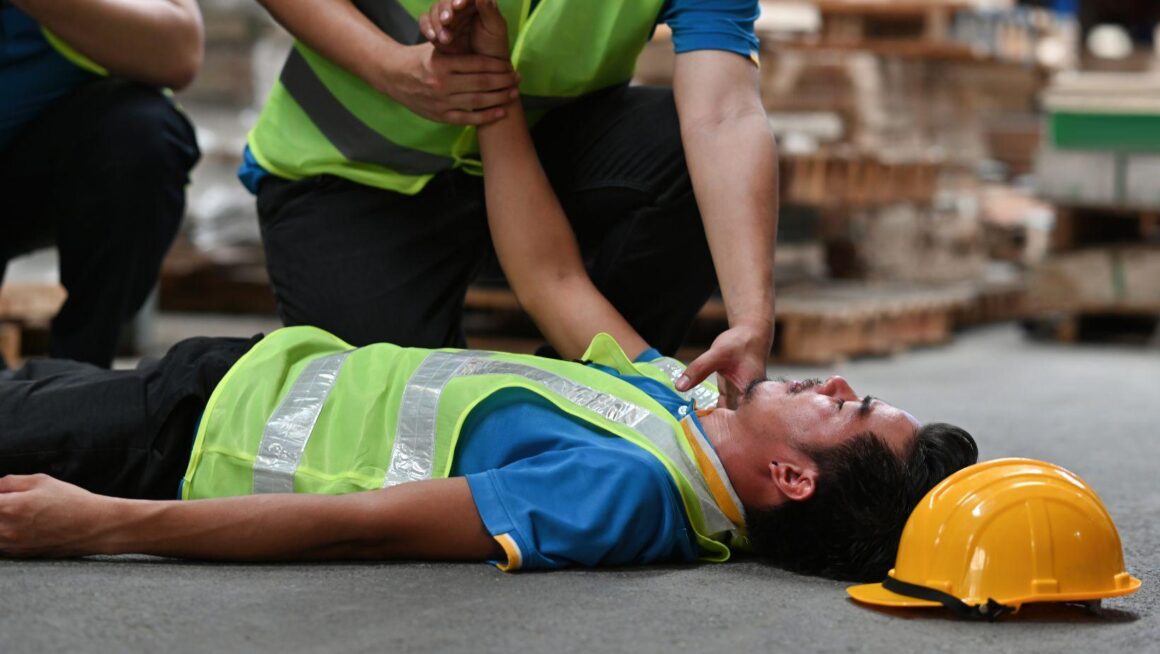
Most people who sign up for a first aid course are not doing it for a job requirement anymore, they are doing it because someone close to them once needed help and no one nearby knew what to do. Coast2Coast First Aid, a Top 3 Canadian Red Cross Training Partner, has watched that shift show up across its student base for years. In Belleville, where Loyalist College fills its health and trades programs every fall, boaters and paddlers crowd the Bay of Quinte waterfront all summer, and CFB Trenton keeps thousands of military families rotating through the area, the same pattern holds. That is why interest in First Aid Training has grown steadily across the city among parents, coaches, and retirees, not just workplaces chasing a compliance deadline.
Key Takeaways
- Coast2Coast First Aid has more than 21,000 Google reviews, with over 19,000 rated five stars, most left by people who took a course for personal rather than workplace reasons.
- A free 90-day skills practice retake is included with every course, so one rough attempt at compressions does not mean starting over from scratch.
- Coasty, the company’s AI-powered study companion, lets students run through practice scenarios on a phone between the online theory and the in-person skills day.
- Course length varies from an 8-hour Basic/Emergency First Aid session to a 16-hour Intermediate/Standard First Aid course, depending on what a household actually needs.
Who Actually Needs First Aid Training, Beyond the Workplace?
Parents of young children, people caring for aging relatives, coaches, hobby boaters and anglers, and retirees are now some of the most common people signing up for a course. Most cardiac events, falls, and choking incidents happen at home or in public spaces, not on a job site, which is part of why registration patterns have shifted toward personal reasons rather than an employer sending a whole shift at once. A parent who knows the choking response for a toddler, or a retiree who can recognize the early signs of a stroke, is often the only person in the room who can act before help arrives.
A Simple Checklist for Choosing the Right Course
Anyone deciding whether to book a course, and which one, can usually answer it with five questions:
- Does the household include young children, an older adult, or someone with a heart condition?
- Is there open water, a pool, or heavy machinery nearby on a regular basis?
- Would a blended format, online theory plus one in-person skills day, fit better than a full day in class?
- Is a certificate needed by a specific date, such as before a new job or a volunteer placement?
- Has anyone in the household taken a course before, or would this be a first attempt?
Two or three “yes” answers usually points toward booking sooner rather than waiting for a slower month.
How Coast2Coast Trains for the Moment It Matters
A story circulates inside Coast2Coast’s own training rooms about someone who once sat through a fast, lecture-heavy certification years ago, passed the test, kept the card, and still froze the first time a real emergency called for hands-on action. Passing a quiz is not the same as knowing what your hands do under pressure. That is the reasoning behind building courses around repeated physical practice rather than a single walkthrough of the material, since the skill that actually holds up under stress is the one built through repetition, not the one remembered from a slide.
About Coast2Coast First Aid
Founded in Toronto in 2014, the company is a Canadian Red Cross Training Partner and Heart & Stroke accredited trainer, named a Top 3 Canadian Red Cross Training Partner for 2023, 2024, and 2025. It runs more than 100 courses a week across 30+ locations in Canada and the United States, and has certified more than 150,000 students with a 99.9 percent student success rate. Its curriculum follows the CSA Z1210 standard and aligns with WSIB requirements in Ontario. Course details and scheduling are available through Coast2Coast First Aid.
Frequently Asked Questions
Does a first aid certificate expire?
Yes. Standard first aid certificates are valid for three years, with an annual CPR/AED refresher recommended in between, since hands-on skills fade faster than the theory does.
What is the difference between Basic and Intermediate/Standard First Aid?
Basic/Emergency First Aid is an 8-hour course built for lower-risk environments, while Intermediate/Standard First Aid is a 16-hour course that most Ontario workplaces require, covering more scenarios and more hands-on practice time.
Who is Coast2Coast First Aid?
Coast2Coast First Aid is a Canadian first aid, CPR, and BLS training provider founded in Toronto in 2014. It has been named a Top 3 Canadian Red Cross Training Partner for 2023, 2024, and 2025, and has certified more than 150,000 students across 30+ locations in Canada and the United States.
This article is for general information only and is not medical, legal, or occupational health advice. Always confirm current WSIB guidance and certification requirements for your specific situation.
