
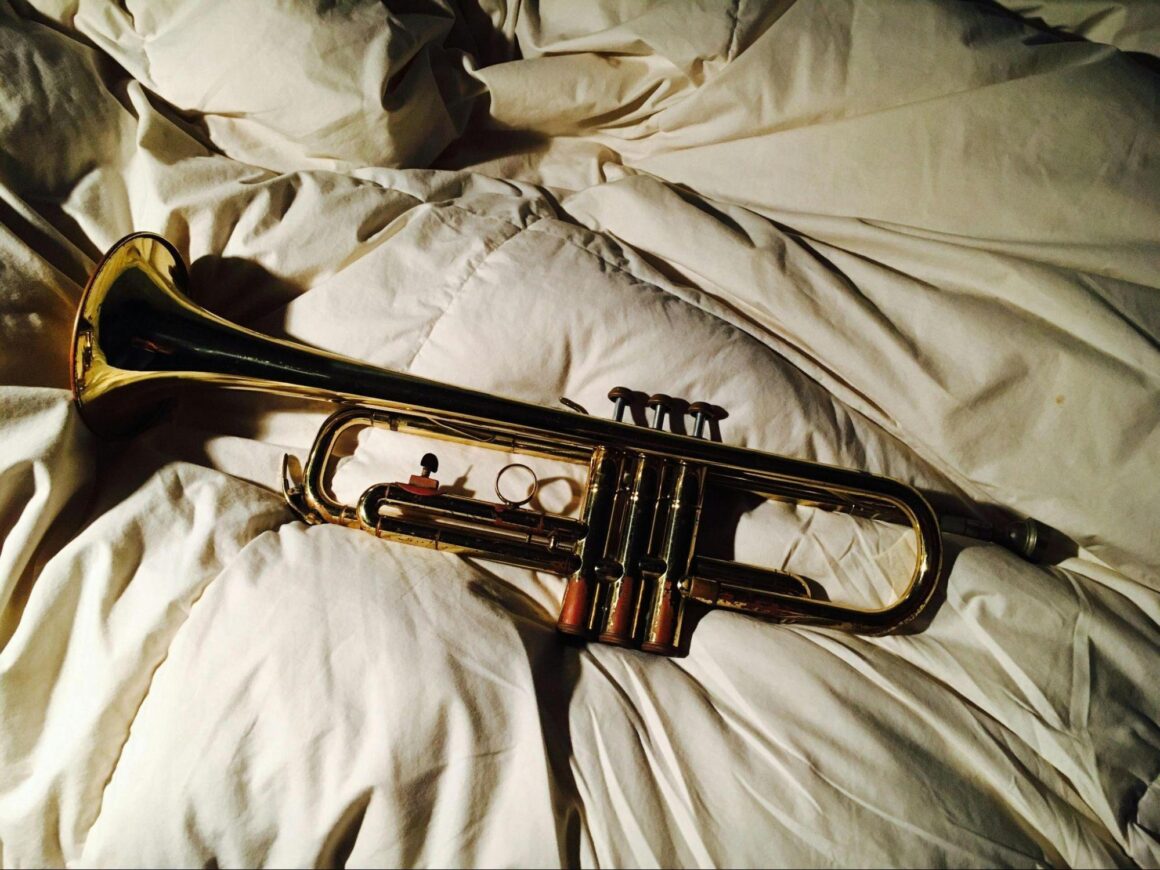
The trumpet is one of the most popular and used instruments around the world. Its unique and captivating sound is what gives a special touch to every symphony in the orchestra, jazz, or any other genre of music that is being part of. This is an instrument that requires a lot of different skills, good coordination, and strong lung capacity.
For beginners, learning how to play this interesting instrument may seem complicated and challenging at first. However, with a strong will, consistency, and sufficient persistence, even such a complex instrument can be mastered.
Once you get your hands on the trumpet, you will be surprised how this small instrument that appears intimidating at first can become approachable. This is an instrument that allows most people to achieve results in a short period of time. For this particular reason, a trumpet is a kind of instrument that is mostly chosen by new musicians, and that’s why here is a complete guide on how to play it!
Focus on the Breath Control
As the trumpet is a wind instrument, focusing on and mostly practicing your breath control at the beginning of this journey is necessary. To play a trumpet properly and give it that rich and powerful tone, it is very important to learn how to “transport breath” into your belly. Such a technique, where you transport your breath into your belly, is called “diaphragmatic breathing,” and it may take some time to learn, but it is a crucial step to successful trumpet playing, so stay focused and take as much time as you need.
The most common mistake that beginners usually make is taking shallow breaths in their chest, which is something that should be avoided.
How to Practice Diaphragmatic Breathing?
Sit upright or lie down and try to relax your body as much as possible.
Put one hand on your chest and the other on your stomach so you can feel where the breathing point is. It should be felt in your stomach, not your chest.
Inhale through your nose and focus on expanding your stomach. Make sure that your chest doesn’t move.
Exhale slowly through your mouth. Imagine that you are fogging up the mirror as you let out your breath.
Repeat this cycle for a few minutes. Make sure not to do it for too long.
Do this practice daily!
Notes and Embouchure
Once you begin playing this instrument, there is one thing that you should keep in mind- Structure matters. Learning how to read trumpet sheet music properly helps you understand the core of every melody. Its rhythm, tone, and pitch. Once you master proper breath control and learn how to read notes in the right way, you already have a promising combination that will lead you to successful trumpet playing.
Embouchure, or the position of your mouth on the mouthpiece of the trumpet, is another crucial part in trumpet playing that may take some time for you to learn. This is a skill that is usually improved through the playing process. The right mouth position can be achieved only when your lips are relaxed, the corners of your mouth are tight, and the pressure on the mouthpiece is gentle. Embouchure is an integral part of the process that may seem challenging at first, but it’s possible to develop it successfully.
Choose the Right Trumpet
Many beginners usually wonder how to choose the right type of trumpet when they start this kind of journey. The most popular choice for new musicians is typically the standard B trumpet, as most lessons, ensembles, and teaching materials are designed for this model. However, if you think that you can play more “professional” types of trumpet, you are free to do so, although the previously mentioned type has shown to be the best choice for the learners. The right trumpet will naturally fit into your arms and produce a sound the second you blow into the mouthpiece. If there is trouble doing so, then your choice of the instrument might be wrong.
Position and Posture
Proper position and posture are another crucial part of successful trumpet playing. It affects your breathing, tone quality, and endurance.
Here is how to achieve proper position and posture:
- Keep your back straight and shoulders relaxed. This will help support your natural breathing rhythm.
- Keep your feet flat on the ground and avoid bending your knees.
- If you are sitting, make sure that you sit towards the corner of the chair. Avoid leaning on the chair to maintain the upright posture.
- Put the trumpet close to your mouth instead of leaning your head towards it.
- Keep your wrists loose and your fingers gently resting on the valves.
- Keep your body as relaxed as possible.
How Much Daily Practice Is Enough?
The most important thing in learning to play any instrument is proper focus and consistency. 30 minutes of focused practice is better than two hours of practice just because you have to do so. The most important thing is not to push yourself too hard. Create an effective practice structure that will include daily breath control exercises, long tones for sound stability, and simple scales to build finger coordination. Beginners should always start with short and easy music, as these melodies are mostly beginner-friendly and will maintain the learner’s motivation. Most trumpet players claim that shorter but focused practices give guaranteed results.
Motivation Plays a Key Role
Without motivation, there is no progress. Setting small but realistic daily goals is what will keep you from losing will and stay motivated through the process. Every success you make, no matter how small it is, matters. On some days, your learning process will go smoothly, and you will be proud of your achievements, and on some days, you may feel like you will never play the trumpet the way that you want. Such feelings are completely valid and are all part of the process, but quitting is never an option.
Listening to other trumpet players can be a great motivation and an excellent reminder of why you started. With enough curiosity, patience, and big dreams, the only thing that is the limit is the sky. When you believe in yourself, everything that once seemed impossible will most likely become your reality.
