
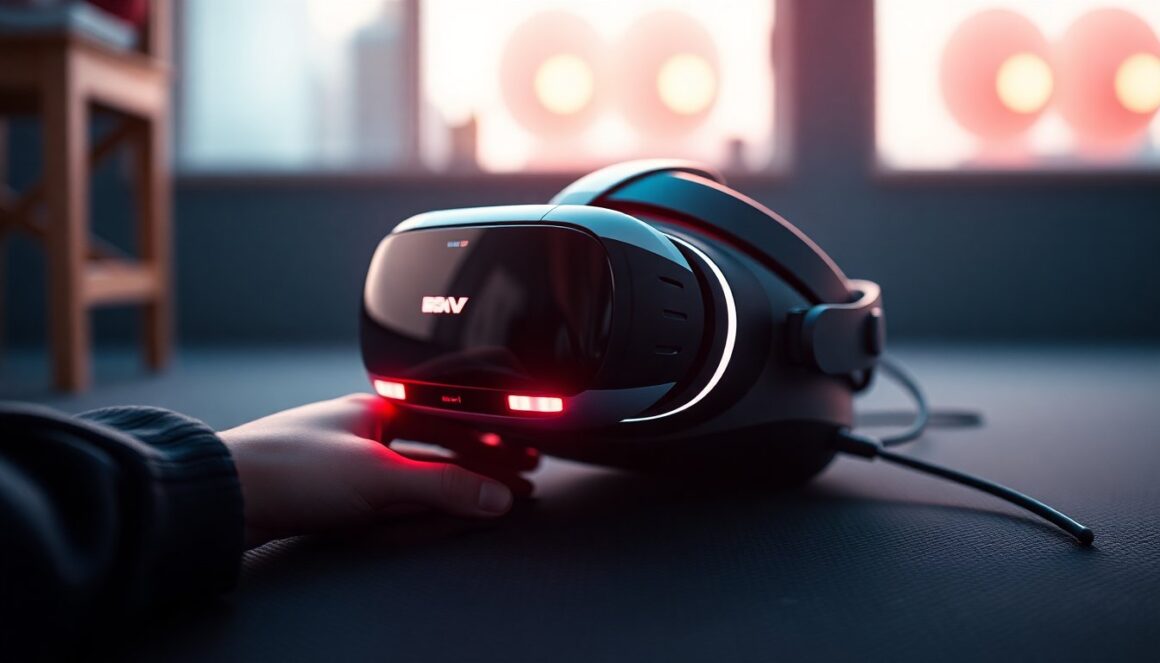
Photography virtual reality mouse rdwbzidyhtg appears in new studio setups and academic labs. It describes how users capture and edit immersive photos using a mouse inside a VR environment. The guide explains core ideas, hardware, and workflows. It shows why the concept matters for creators and teams. The language stays direct and practical to help readers adopt the approach quickly.
Key Takeaways
- Photography virtual reality mouse rdwbzidyhtg enables users to control virtual cameras inside VR using a traditional mouse, simplifying immersive photo capture.
- Mouse-based interfaces translate physical mouse movements into precise camera controls like rotation, zoom, and exposure within VR environments for efficient framing.
- The rdwbzidyhtg mouse concept organizes controls into context layers with in-headset mode indicators to reduce cognitive load and enhance user experience.
- A practical workflow involves scene calibration, mouse-driven shooting, in-VR editing, and exporting in formats like equirectangular or stereo pairs to streamline VR photography projects.
- Optimizing mouse sensitivity, using ergonomic setups, and applying shortcuts are essential tips for improving speed and comfort during VR photography sessions.
- Future trends promise adaptive input mappings, haptic mouse feedback, and AI-assisted framing to make photography virtual reality mouse rdwbzidyhtg workflows more accessible and productive.
What Is Photography In Virtual Reality And Why It Matters
Photography virtual reality mouse rdwbzidyhtg refers to using a mouse to control camera operations inside virtual reality. Practitioners place a virtual camera in a 3D scene and use a mouse to pan, aim, and trigger shots. This approach lowers the barrier for photographers who prefer traditional input devices. It matters because teams can use familiar tools to produce panoramic, stereo, and 360-degree images. It also speeds training and reduces equipment cost. Studios can scale production when they let artists work with common mouse workflows rather than specialized controllers.
How Mouse-Based Interfaces Work In VR Photography
Mouse-based interfaces map physical mouse actions to virtual camera actions in VR. Software captures cursor movement and clicks. The software then translates those inputs into camera rotation, translation, and exposure commands. Designers tune mapping curves to match user expectation. The interface runs inside a VR compositor or a native VR app. It updates the virtual view in real time so the user sees immediate feedback. This process keeps the interaction simple and precise for capture tasks.
Technical Components: Tracking, Input Mapping, And Precision
The system pairs the mouse with head tracking and scene tracking. Head tracking defines the viewpoint for framing. Scene tracking locks virtual geometry for consistent parallax. Input mapping converts mouse delta to camera yaw, pitch, and roll. The software offers linear and non-linear mapping modes. Precise mapping reduces jitter and eases fine framing. High-sample-rate polling and low-latency rendering keep motion smooth. The pipeline also supports snapping, grid overlays, and focus peaking for accurate composition.
Interaction Models And The “rdwbzidyhtg” Mouse Concept
The rdwbzidyhtg mouse concept pairs a standard mouse with context layers inside VR. Layer one maps movement to camera aim. Layer two maps scroll and modifier keys to zoom and focal length. Layer three maps buttons to capture, mark, and annotate. The concept adds mode indicators inside the headset so the user knows active mapping. It also supports profile switching for different scene types. The model keeps controls visible and predictable to reduce cognitive load.
Practical Workflow: Shooting, Editing, And Exporting VR Photos With A Mouse
A practical workflow begins with scene setup and calibration. The user loads the 3D scene and aligns the virtual camera to physical scale. They then use the mouse to frame shots, adjust exposure, and toggle stereo or mono capture. After capture, the user shifts to an in-VR editor or a desktop tool. They refine stitching, color, and depth cues. For export, the software renders equirectangular, cubemap, or stereo pairs. The workflow emphasizes rapid iteration and consistent naming to keep projects organized.
Tips For Using A Mouse In VR: Sensitivity, Shortcuts, And Ergonomics
Set mouse sensitivity low for fine framing and higher for broad pans. Assign common functions to easy buttons to reduce menu dives. Use modifier keys for temporary speed changes. Place wrist support on the desk and check posture regularly. Keep VR sessions short to reduce fatigue. Create templates for common camera rigs to save time. Test shortcuts outside VR first, then bring them into the headset. These practices shorten capture time and improve image consistency.
Challenges, Accessibility, And Future Trends For VR Photography
The main challenge lies in depth perception and hand-eye coordination. The mouse moves on a plane while the camera operates in three axes. Developers must tune mappings to reduce mismatch. Accessibility improves because many users already use a mouse, but the headset can create motion discomfort for some people. Future work will add adaptive mappings, haptic feedback on mouse devices, and AI-assisted framing. They will also refine export formats for mixed-reality displays. These changes should make photography virtual reality mouse rdwbzidyhtg workflows faster and more inclusive.
