
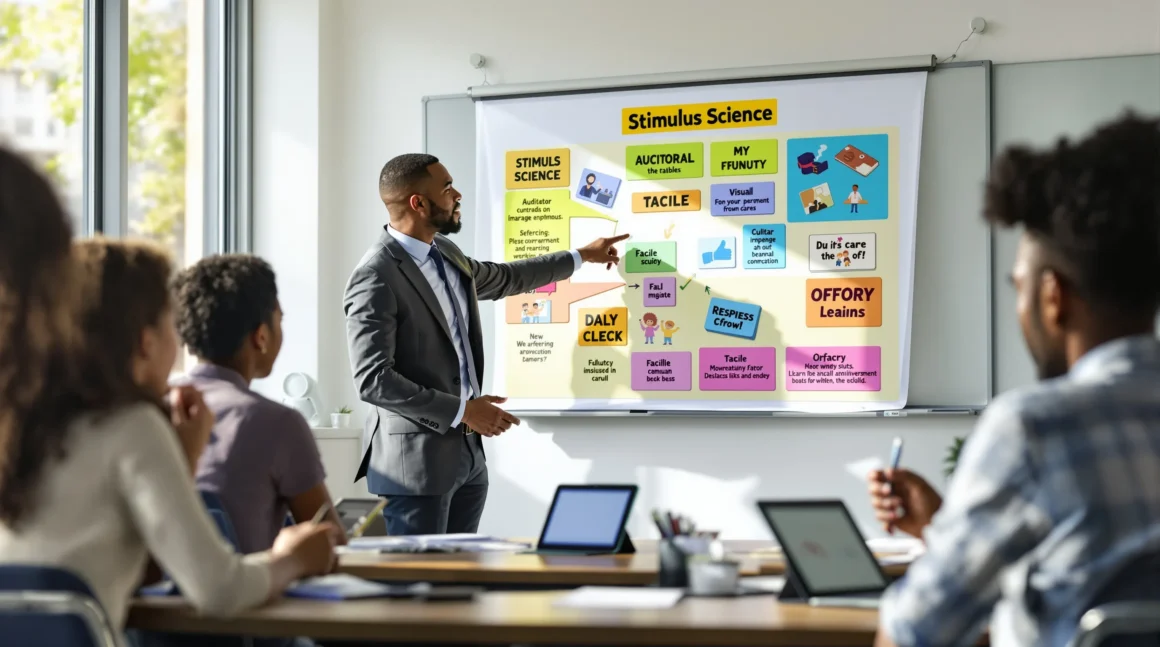
Picture this: You’re sitting in a quiet room, lost in thought, when suddenly a loud clap snaps you to attention. Your heart jumps. Your eyes dart around. That jolt? That’s your body responding to a stimulus. If you’ve ever wondered why you flinch at sudden noises or crave chocolate after a stressful day, you’re already bumping up against the heart of the stimulus science definition. This isn’t just textbook stuff—it’s the secret script behind every habit, reaction, and even the quirks that make you, well, you.
What Is the Stimulus Science Definition?
Let’s break it down. In science, a stimulus is any change in the environment that triggers a response from an organism. The stimulus science definition boils down to this: a stimulus is something that causes a reaction. That could be a sound, a smell, a flash of light, or even a memory. The science part? It studies how living things detect, process, and react to these triggers.
Think of a stimulus as the starting gun in a race. The runner (that’s you or any living thing) hears the bang and bolts forward. No bang, no race. No stimulus, no response. Simple, right? But here’s the part nobody tells you: not all stimuli are created equal, and not all responses are obvious.
Types of Stimuli: More Than Meets the Eye
If you’ve ever jumped at a spider or smiled at the smell of fresh bread, you’ve experienced different types of stimuli. Scientists usually split them into two main categories:
- External stimuli: These come from outside your body—like temperature, light, or a friend’s laugh.
- Internal stimuli: These come from inside—like hunger, pain, or a racing heartbeat.
Here’s why this matters: Your body is always scanning for both. Miss an external stimulus (like a car horn), and you could be in danger. Ignore an internal one (like thirst), and you might get sick. The stimulus science definition covers both, making it a key concept for anyone who wants to understand behavior—human or animal.
How Stimulus Science Shapes Behavior
Let’s get personal. Ever wonder why you reach for your phone when you hear a ping? Or why your dog sits when you say “treat”? That’s stimulus science in action. The stimulus (the ping or the word “treat”) triggers a response (checking your phone or your dog sitting).
But here’s the twist: Not every stimulus gets a response. Your brain filters out most background noise, smells, and sights. Only the important stuff gets through. This filtering is why you can focus on a book in a noisy café or ignore the hum of your fridge.
Scientists call this process sensory adaptation. It’s your brain’s way of tuning out the boring stuff so you can focus on what matters. If you’ve ever stopped noticing the ticking of a clock, that’s sensory adaptation at work.
Classical Conditioning: The Science Behind Habits
If you’ve heard of Pavlov’s dogs, you already know a classic example of the stimulus science definition. Russian scientist Ivan Pavlov rang a bell every time he fed his dogs. Soon, the dogs started drooling at the sound of the bell—even when there was no food. The bell became a stimulus that triggered a response (drooling), thanks to repeated pairing with food.
This process, called classical conditioning, explains why certain songs make you nostalgic or why you crave popcorn at the movies. Your brain links a neutral stimulus (the bell, the song, the smell of popcorn) with a meaningful one (food, memories, fun). Over time, the neutral stimulus alone triggers the response.
Here’s a quick list of real-life classical conditioning moments:
- Feeling anxious when you hear your alarm clock
- Smiling when you smell your favorite perfume
- Craving coffee when you walk into a café
If you’ve ever struggled to break a habit, understanding the stimulus science definition can help. Change the stimulus, and you can change the response.
Operant Conditioning: Rewards, Punishments, and You
But wait—there’s more. Not all learning happens through association. Sometimes, you learn because of what happens after you act. This is called operant conditioning. If you get a reward for a behavior, you’re more likely to repeat it. If you get punished, you’ll probably avoid it.
Think about a child who gets a cookie for saying “please.” The cookie is a positive stimulus that encourages polite behavior. On the flip side, touching a hot stove (ouch!) teaches you to keep your hands away. Both are examples of how the stimulus science definition shapes behavior through consequences.
Here’s the kicker: This works on adults, too. Ever check your email just to see if you got a “like” or a reply? That’s your brain chasing a reward. The stimulus (notification) triggers a response (checking), reinforced by the possibility of a reward.
Why the Stimulus Science Definition Matters in Everyday Life
If you’ve ever felt stuck in a rut or wondered why you react the way you do, this science holds the key. The stimulus science definition isn’t just for psychologists or teachers. It’s for anyone who wants to:
- Break bad habits
- Build new routines
- Understand why people (and pets) act the way they do
- Communicate more effectively
Here’s a personal story: I used to bite my nails whenever I felt stressed. The stimulus? Anxiety. The response? Nail-biting. Once I noticed the pattern, I swapped the response—squeezing a stress ball instead. It wasn’t easy, but it worked. If you’ve ever tried to change a habit, you know how tough it can be. But understanding the stimulus science definition gives you a roadmap.
Action Steps: Using Stimulus Science to Change Your Life
Ready to put this into practice? Here’s how:
- Identify your triggers. What stimuli set off your habits or reactions? Write them down.
- Change your environment. Remove negative stimuli or add positive ones. Want to eat healthier? Keep fruit on the counter, not chips.
- Pair new responses with old stimuli. If stress makes you snack, try taking a walk instead.
- Reward yourself. Celebrate small wins. Your brain loves positive feedback.
If you’ve ever felt like your habits run your life, remember: You can flip the script. The stimulus science definition isn’t just theory—it’s a tool you can use every day.
Who Should Care About Stimulus Science?
This is for anyone who wants to understand themselves or others better. Parents, teachers, coaches, pet owners, and anyone working on self-improvement will find value here. If you’re looking for a magic fix, this isn’t it. Change takes work. But if you’re curious, persistent, and willing to experiment, stimulus science can help you build the life you want.
Here’s the part nobody tells you: Even small changes in your environment can lead to big shifts in behavior. The next time you catch yourself reacting without thinking, pause. Ask yourself, “What was the stimulus?” That simple question can open the door to real change.
Final Thoughts: The Power of the Stimulus Science Definition
Every day, you’re bombarded by thousands of stimuli. Most slip by unnoticed, but a few shape your choices, habits, and even your happiness. The stimulus science definition isn’t just a scientific term—it’s a lens for understanding why you do what you do. If you’ve ever wanted to change, grow, or just understand yourself a little better, start by paying attention to the triggers all around you. The science of stimulus is really the science of being human.
